With the stretch in the evenings finally arriving and spring on the horizon, you're probably already dreaming about dusting off the patio furniture and reclaiming the garden. But if you've got little ones who treat the back lawn like their personal adventure playground, there's one question that crops up every year around this time: is it actually safe to let them loose after you've fertilised the grass?
The short answer? Yes. But with a few sensible caveats that are way less dramatic than you might think.
According to outdoor specialists, there's a lot of confusion floating around about lawn feed and children's safety. And most of it is causing parents unnecessary stress. The real risk isn't your toddler rolling around on the grass three days after you've treated it. It's contact with the fertiliser while it's still sitting there in granule form or before it's been properly watered in.
The 48-hour rule (and why it matters)
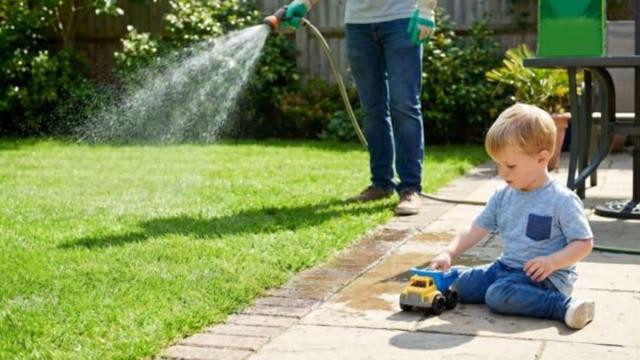
Alex Essex, a specialist at Patio Black Spot Removal Company who works with domestic gardens year-round, says timing is everything. "Parents often think fertiliser makes the whole lawn dangerous for weeks, which isn't really the case," he explained. "The real issue is when kids run or crawl on the grass while granules are still there or the product hasn't been watered in properly. That's when it can get on hands, shoes or toys."
His advice? Keep the kids off freshly treated lawns for up to 48 hours. Once the fertiliser has been absorbed and the lawn is dry, normal play can resume. Though he does recommend giving small hands a wash afterwards just to clear any residue.
So no, you don't need to cordon off the garden like a crime scene for a fortnight. You just need to be smart about when you apply the stuff.
Six fertiliser myths that catch parents out
Alex reckons a lot of the worry comes from outdated advice and safety myths that have taken on a life of their own. Here are the biggest ones he sees tripping families up.
Myth 1: Fertilised lawns are unsafe for days
Not true. Most household fertilisers are absorbed quickly. After watering and once the surface is dry (typically within 24 to 48 hours) lawns can usually be used as normal. Just encourage the kids to wash their hands after playing outside, which is solid advice regardless.
Myth 2: Simply touching treated grass is dangerous
The bigger concern is contact with loose or wet fertiliser sitting on the surface, not dry grass itself. Once products have been watered in and absorbed into the soil, there's very little residue left behind. Problems tend to arise if children handle undissolved granules or put their hands in their mouths before washing.
Myth 3: 'Natural' fertilisers are automatically safer for kids
This one catches a lot of people out. Organic or 'natural' doesn't always mean risk-free. Some products still contain concentrated nutrients or animal-based ingredients that can irritate skin or cause stomach upset if accidentally ingested. "Safe application and supervision matter far more than whether a product is labelled natural or synthetic," Alex noted.
Myth 4: Using more fertiliser gives better results
Tempting as it might be to go heavy-handed for that Instagram-worthy lawn, applying more than recommended doesn't improve results. It can actually leave excess granules sitting on the surface, increasing the chance of children picking them up. Stick strictly to the label amounts. It's both safer and more effective.
Myth 5: Rain will wash everything away safely
Here's one that sounds logical but can backfire. Heavy rain soon after application can move fertiliser into puddles, paths or patios where children often play. Alex recommends applying during dry weather and watering lightly yourself rather than relying on Irish weather to do the job (because when has that ever worked out?).
Myth 6: Families should avoid fertiliser completely
No need to go that far. Modern domestic lawn feeds are designed specifically for home gardens and are considered safe when used exactly as directed. Alex's suggestion is to time your application around when children are indoors or at school to allow the lawn to dry before play. "This means families don't have to miss out on using their garden," he added.
What to watch for (just in case)
Accidents happen. If your little one has handled or accidentally swallowed fertiliser granules, keep an eye out for mild irritation. Symptoms can include stomach upset, nausea, vomiting, skin redness or eye irritation. Most cases are minor, but if symptoms persist it's worth getting them checked by a medical professional.
"The reality is, you don't need to choose between a healthy lawn and a safe garden," Alex said. "It's just about simple precautions. Water it, let it dry, and clear up any loose granules. Most problems happen when those steps are skipped."
So as we edge closer to spring and those golden afternoon garden sessions, take heart. You can have the lush green lawn and let the kids tear around on it. You just need to plan the fertilising for a quiet morning when they're at school or creche, water it in properly, wait for it to dry… and then release the small humans.
Your grass (and your sanity) will thank you.