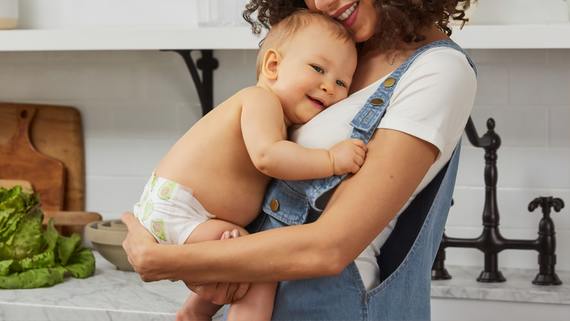
Becoming a mum opens you up to a whole new spectrum of emotions. On one hand, the joy and excitement of first holding and caring for your baby are unlike anything else you will ever experience. However, some new mums experience what is called baby blues, which is a period of anxiety, mood swings and lack of concentration. While the baby blues period usually wears off after you start accommodating to your new life as a mum, about 1 in 7 women experience a more severe problem – postpartum depression.
Postpartum depression can start off feeling like the baby blues, as they share many similar symptoms, but unlike the baby blues, postpartum depression symptoms are more severe and don’t typically disappear on their own. Postpartum depression does not make you a bad parent and you should not blame yourself for suffering from it. What you can do, to avoid having to undergo medication, is to make some changes in your life and never be afraid to talk about it.
Start to exercise regularly
There are no words to express how much exercise can help to change your life for the better. From mild anxiety to severe episodes of depression, all therapist will recommend patients to start exercising. That is because exercise helps with the release of endorphins. Endorphins are chemicals that your brain produces in order to increase your feel-good sense. At the same time, exercise also helps you get your mind off things, allowing you to break the negative thoughts cycle.
But with the baby taking up most, if not all, of your time, you may be wondering when will you have the time and energy to exercise. Fortunately, you are not the only mum struggling with lack of time and you need to remember you are not alone. You can start small, by taking a stroller walk with the baby and increase the pace as you start feeling more energized. You can also try various program, such as Baby and Me exercise programs, where exercising with the baby is part of the program.
Ask for help from your closed ones
The last thing you should do if you suspect you might be suffering from postpartum depression is not telling anyone about it. Your partner, your mother, a friend you confide in, anyone can be of great help. First, start by talking with your partner about how you feel. If you feel you don’t have time for yourself and can’t seem to find the energy to cope with everything, ask your partner to take care of the baby for at least one hour each day. Take that time to do things for yourself and return feeling fresh and energized. No matter if you want to read a book, exercise, go get yourself some ice cream or simply take a power nap. Parenthood is a partnership and your partner will surely understand that sometimes you need a bit of time for yourself.
If this period seems to affect the both of you, maybe your parents are willing to help you out and give you two a bit of time to do something together. Maybe go to a movie or a walk in the park, anything that will help you reconnect as a couple and relieve some of the tension.
Try therapy
There is no reason to feel ashamed for needing therapy. Therapy work much better than antidepressants, as it is in no way affecting you or the baby. There are multiple types of therapy you can try, depending on what you feel works best for you. Joining a therapy group or seeing an individual therapist with whom you can talk about how you feel and can guide you towards regaining your confidence and balance.
Some mothers have reported that other unconventional therapy methods, such as Reiki therapy, has also helped with postpartum depression and anxiety. You can try Reiki therapy with the help of UK psychics who are specialized in spiritual treatments. Reiki, for example, is a form of natural healing, which helps you reach spiritual peace and promotes a harmonious way of life.
Take natural supplements
After giving birth and especially while adjusting to the new life as a mum, your body may experience some imbalance, which is why you may have to consider helping it with some supplements. Mothers are sometimes reluctant to take supplements, as they fear it may interfere with breastfeeding.
Some of the ingredients used in natural supplements include chamomile, saffron and vitamin D, all meant to help with relaxation.
It is recommended that you do speak with your doctor before taking any supplements. While some of them have been proven no to affect you or the baby in any form, each person is different and your doctor should be able to recommend those that are safe for you.
Take some time for yourself
Especially in the first few months, it can be extremely hard to separate yourself from the baby. After all, who could blame you? You gave birth to this wonderful bundle of joy, but sometimes it gets the worse of you. In those moments when you can’t seem to find the power to move forward, the best thing you can do it take some time just for yourself.
With baby steps, try to get back into the life you used to have before the baby. Sure, nothing will be the same and you are probably aware of that, but it does not mean you have to forget about yourself entirely.
Think of what brought you joy before the baby and start going back to those habits. Maybe you liked to go to the gym, or read books, or you were into painting, anything that made you feel happy needs to find its way back into your life. Take it one step at a time and don’t force yourself if you don’t feel like it. Remember that your journey is unique and just because you have a bit of a rough time adjusting to your new life, it does not mean there is something wrong.