Jave you found yourself standing in your child's room wondering how on earth you ended up with so many toys, yet still hearing "I'm bored, there's nothing to do!" on a daily basis? You're not alone in this puzzle, and the good news is there's a simple solution that doesn't involve buying a single new toy.
Toy rotation and creative reuse can completely transform how your children engage with their existing toys. It's about working smarter, not harder – and definitely not spending more money you don't have.
The magic of toy rotation
Think of toy rotation like a library system for your home. Instead of having every single toy available all the time, you keep some toys accessible while storing others away for a few weeks. When you swap them back, it's like Christmas morning all over again.
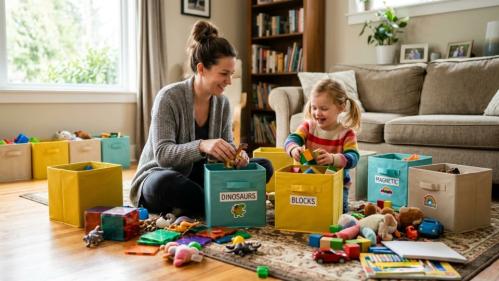
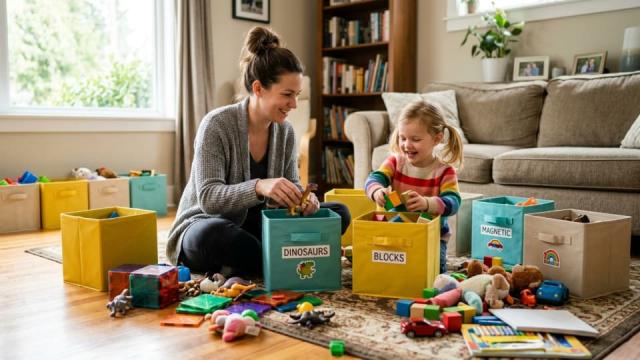
Start with three or four boxes or storage bins. Put about two-thirds of your child's toys into these boxes, leaving only one-third out for play. Every two to three weeks, swap out what's available. The toys that were stored away suddenly become exciting again, while the ones that were out get a rest.
Many parents find this approach not only rekindles their children's interest in forgotten toys but also makes tidying up much more manageable. With fewer toys out at once, there's less mess to clear away each evening.
Creative ways to refresh existing toys
Sometimes all a toy needs is a fresh perspective. That set of building blocks doesn't always have to be just blocks – they can become a city for toy cars, a castle for dolls, or even a pretend grocery shop.
Try introducing new themes with existing toys. Those plastic animals could go on a jungle adventure one week and live on a farm the next. Action figures might become teachers in a pretend school or chefs in a make-believe restaurant.
Combining different toy sets often creates entirely new play experiences. Mix the play kitchen items with building blocks, or use craft supplies to create new accessories for dolls. You'll be amazed at how creative children become when you give them permission to mix and match.

Simple DIY additions that cost nothing
Before you think about spending money on new toys, look around your house for items that could enhance existing play. Empty boxes become castles, cars, or boats. Kitchen roll tubes transform into telescopes or tunnels for toy cars.
Fabric scraps can become superhero capes for action figures or blankets for dolls. Old magazines provide endless cutting and sticking opportunities, while empty containers become perfect additions to play kitchens or shops.
The key is seeing everyday items through your child's eyes. What looks like recycling to you might be the perfect addition to their imaginative play.
Getting your children involved
Including your children in the toy rotation process can actually make it more successful. Let them help choose which toys to pack away and which ones to keep out. This gives them some control over the process and helps them feel excited about the upcoming swap.
You might be surprised at how willing children are to put toys away when they know they'll see them again soon. Frame it as "giving the toys a rest" or "saving them for later" rather than taking them away.
Managing the "but I want everything out" moments
Let's be honest – not every child will embrace toy rotation immediately. If you're facing resistance, start small. Begin with just one type of toy, like puzzles or books, and rotate those while leaving everything else available.
When children ask for a specific toy that's been packed away, you have a few options. You could do an immediate swap, trading it for something currently out. Or you might say, "That's in the special box for next week – let's put it on our list to remember."
Some parents find it helpful to take photos of the packed-away toys and create a visual "wish list" that children can look at and get excited about for the next rotation.
Storage solutions for real families
You don't need expensive storage systems to make toy rotation work. Clear plastic boxes from discount stores work perfectly – children can see what's inside, and the boxes stack neatly.
Label boxes with pictures rather than just words, especially for younger children. A photo of what's inside taped to the front helps everyone remember what's in each box.
Keep your rotation boxes somewhere accessible to you but not necessarily to your children. This might be on a high shelf, in a wardrobe, or even under a bed. The point is that you can easily reach them when it's time to swap.
Making it work for your family
Remember, there's no perfect way to do toy rotation. Some families swap toys weekly, others monthly. Some rotate everything, others just focus on the toys that create the most mess or seem to be ignored.
The most important thing is finding a system that works for your family's routine and space. If boxing toys feels overwhelming, start by simply putting some toys in a cupboard for a few weeks. Even this simple step can help rekindle interest in forgotten favourites.
Toy rotation isn't about depriving your children or being strict about play. It's about helping them rediscover the joy in toys they already own while making your home a calmer, more organised space. And the best part? It costs absolutely nothing except a little bit of your time.